
Confusing a seminar with team building can lead to a poorly planned budget or mismatched expectations. Let’s clear up the differences between these four formats once and for all—and explain why using the right terms truly changes how they are organized.
Meetings, seminars, offsites, team building: untangling the terminology
“Are we organizing a seminar or a team-building event?” If this question has ever brought you to a standstill in the middle of a planning meeting, you’re not alone. The terms sound similar, overlap, and are sometimes even used interchangeably in casual conversations. So, once and for all, what really sets these formats apart?

1) Meetings, the building blocks of everyday work
Let's start with the basics. A meeting is a short, focused work session, generally centered on a specific objective: making a decision, reviewing progress, or defining the scope of a project. It can last thirty minutes or two hours and involve two people or twenty, but it remains part of the company's usual workflow.
It is not an event in itself. It is the very fabric of collective work, something we weave almost every day without necessarily thinking about it.
2) The seminar, collective breathing
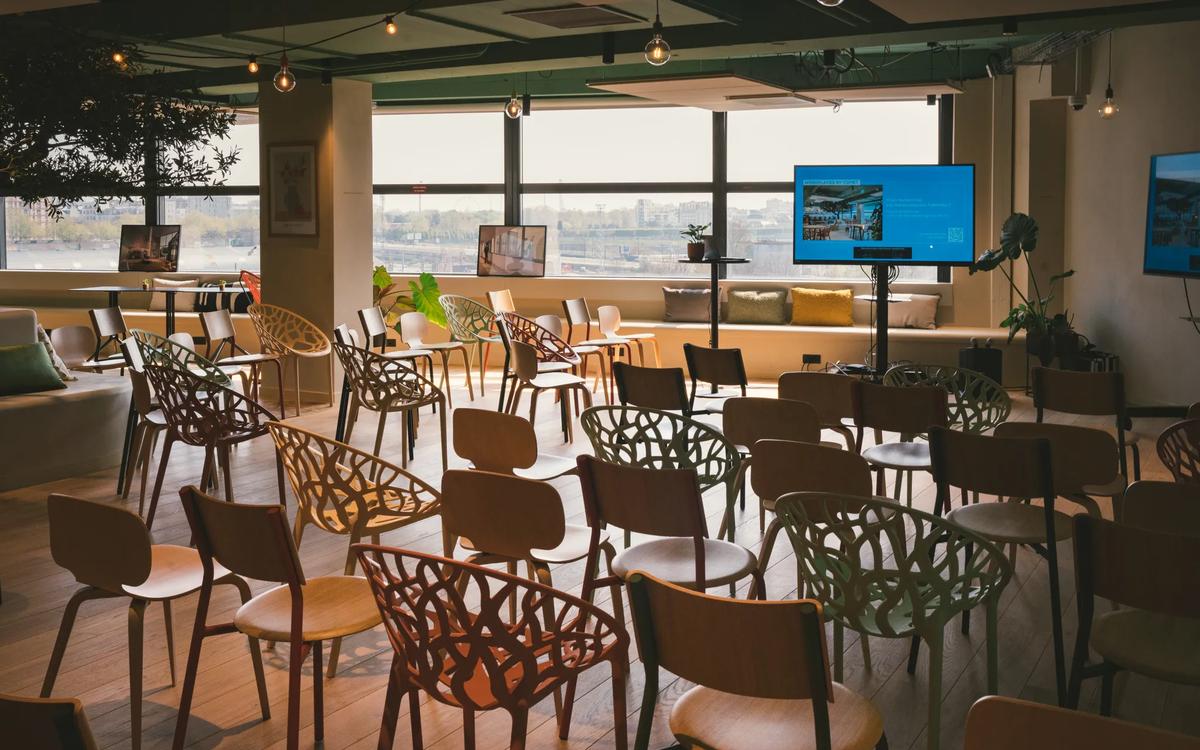
A seminar, on the other hand, operates on a different scale. It usually lasts one or sometimes two full days and is entirely devoted to a broader objective: launching a new strategy, bringing together teams based in different locations, or reflecting on the past year. The venue generally changes too, with participants leaving their usual offices for a different setting that encourages both focus and relaxation.
It's a more structured occasion than a simple meeting, with a carefully planned agenda that alternates work sessions with more informal activities. In short, it's a real event on the company's calendar.
3) “Offsite,” the English term that blurred all the lines
This is the term that causes the most confusion. “Offsite” literally refers to an event held away from the company’s usual premises. In practice, it often means much the same thing as a corporate retreat, but with a cultural nuance: the term comes from Anglo-American and tech companies, where it can refer both to strategic meetings for small teams and to large gatherings.
An offsite can therefore be a small-scale event, bringing together around ten people to focus on a specific objective, or a large annual seminar. The distinction is unclear, and that ambiguity is precisely what causes problems when trying to define a budget or brief with a service provider.
4) Team building: that extra spark
Team building, on the other hand, is not about moving a project or strategy forward. Its goal is different, almost the opposite: to strengthen bonds between colleagues through a shared activity. An escape room, a creative workshop, a sporting challenge, a tasting session—the format does not really matter; the idea remains the same: to build connections away from the usual work-related pressures (although, let's be honest, a healthy dose of friendly competition never hurts).
Team building can be a standalone half-day event or form part of a broader seminar. This is often where the confusion arises: people talk about “holding a seminar” when they are actually organizing a simple team-building activity.

5) Why this distinction really matters
You might think these are just words, and that what really matters is bringing your team together, regardless of the label. But this terminology has a tangible impact on how the event is organized. Confusing a seminar with team building can lead to misjudging the budget, venue, or duration. Announcing an “offsite” to your team without specifying whether it will be strategy-focused or more relaxed also risks creating the wrong expectations.
Naming things properly is ultimately the first step toward organizing them effectively. It helps you ask the right questions from the outset: What is the objective? What format? What budget? What kind of atmosphere are you looking for?
So, what word will you choose for your next event?
Ultimately, the exact label you choose matters little. What matters is knowing precisely what you want to create: a productive work session, a strategic pause, or an opportunity for colleagues to connect. Once that intention is clear, the right term—and, more importantly, the right format—will come naturally.
The right word, the right format, the right place
comet-meetings.com/lieux