

Organising a training course in Paris. Location, objectives, content ... Here are 10 key steps to follow to organise a successful training course.
Do you know the key to a successful training course?
In a working world in perpetual change, enhancing the employer brand is emerging as a crucial issue for human resources. How to attract new candidates, how to retain them, or how to maintain company cohesion. One of the levers used is that of training.
It is not only a way of passing on knowledge, but also a powerful driver of motivation and personal development. A well-organised training course creates a stimulating learning environment, turning every session into an enriching and inspiring experience. For an employee, the benefits are many: improved skills, greater self-confidence, broader career prospects and a heightened sense of belonging. Planning and orchestrating quality training courses takes time in order to ensure their success.
On top of having to coordinate the speakers and design unique content that teaches and keeps the training session on the edge of its seat, it is infinitely necessary to find the ideal venue to bring the participants together.
How to attract people thanks to the venue?
One of the first questions to ask yourself is the location. It is essential to find a place that is comfortable, well equipped and accessible in order to guarantee the success of the training course. A good environment contributes greatly to the effectiveness and the enthusiasm of the learners.
Renting a training room then becomes a crucial step, because a badly chosen space can negatively impact the participants' experience.
At Comet, organising training courses is something we know all about! With our Comet Meetings offer, we provide you with spaces designed for your training courses and your (awesome) corporate events. So, we are giving you a little helping hand with these 10 tips for organising a training course in Paris.
1 Set clear objectives
Identify precisely the skills and knowledge that the participants must acquire at the end of the training course. Set measurable objectives that are specific in order to guide the design of the content. Communicate these objectives to the participants to align their expectations.
2 Know your audience
Analyse the profile of the participants in order to adapt the content, as well as the format of the training course. Take into account their level of skills, their expectations and their specific needs. This will make the training course more relevant and more engaging.
At Comet, one of our tips is also to take a moment at the start of the training course to introduce yourselves. It is always nicer to know who you are talking to and to create a connection before getting to the heart of the matter.
3 Choose competent trainers
Select experts in the field concerned, capable of passing on their knowledge in a clear and dynamic way. Make sure that they also have teaching skills. A good trainer must know how to motivate and involve the participants.

4 Plan with precision
Draw up a detailed schedule including the dates, times and durations of each session. Allow time for interactive activities and discussions. Rigorous planning makes it possible to structure the training course and to maximise its effectiveness. Share the schedule with the participants at least 48 hours in advance.
5 Select a suitable venue
Choose a training room that is comfortable, well equipped and easily accessible for all the participants. Make sure that it has all the necessary equipment, such as projectors, flipcharts and internet access. A pleasant environment encourages not only better learning, but also an atmosphere conducive to exchange and collaboration, making the training course both effective and memorable.

6 Choose a venue with logistical support
Go for a training room that offers complete management of the organisational aspects and the technical problems. This includes taking care of the necessary equipment, the quick resolution of technical incidents and on-site assistance. This choice considerably lightens the mental load for the organisers and makes it possible to concentrate solely on the main objective of the day: the training course.
At Comet, we offer you an on-site technical assistance service to make sure that your training course runs in the best possible conditions.
7 Use varied teaching tools
Diversify the learning materials in order to hold the participants' attention, such as interactive presentations, videos, practical workshops and case studies. Using different formats helps to address the various learning styles.
8 Plan for breaks
Build regular breaks into the schedule to allow the participants to relax and recharge. Breaks encourage concentration and the assimilation of information. They also offer opportunities for informal networking between the participants.
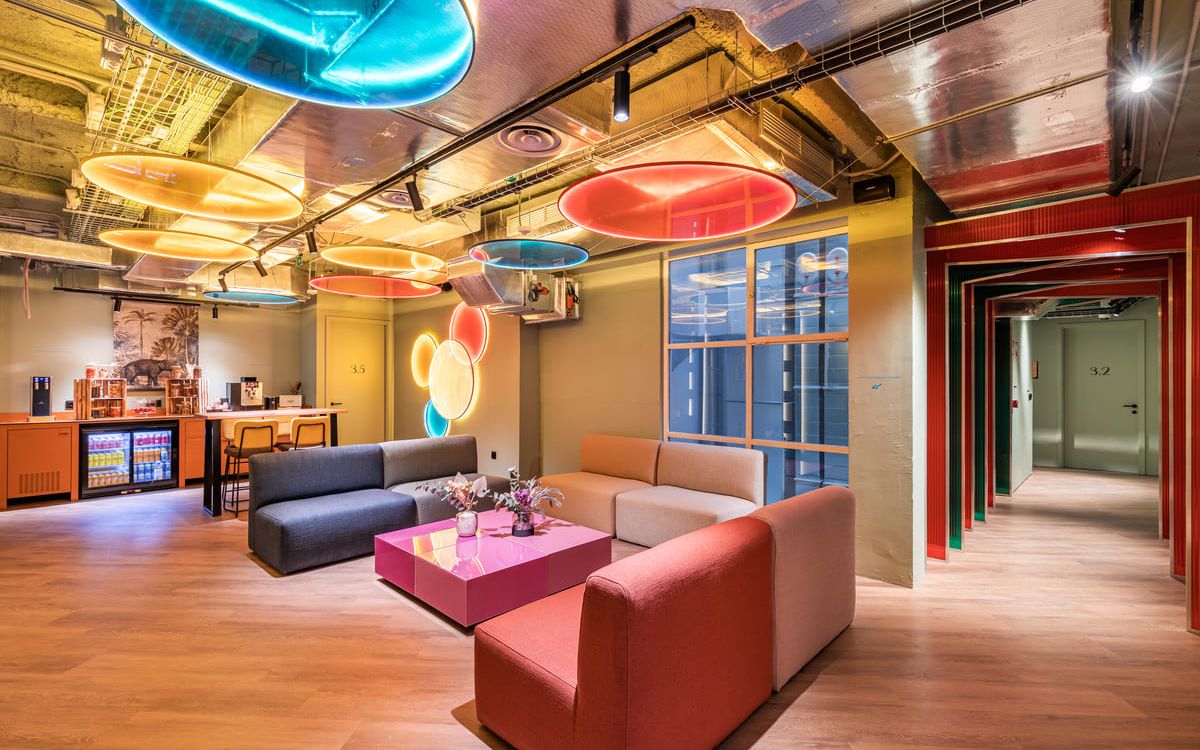
9 Prepare snacks
Make sure you provide snacks to keep up the participants' energy and concentration throughout the training course. Offer a mix of sweet treats for pleasure, but also healthy snacks. These foods help to maintain a stable blood sugar level, thus providing sustained energy and better concentration.
At Comet we have understood this well. In our break areas you will find gourmet snacking 😋. Sweets, rice cakes, nuts and almonds, you are sure to find something you like.

10 Evaluate and adjust
Collect the participants' feedback at the end of each session in order to identify the strong points and the aspects to be improved. Use this information to adjust and improve future training courses. Continuous evaluation guarantees that the training courses remain relevant and effective. You can share a rating scale with the people present in order to collect everyone's feedback.
Organising a training course is a precious opportunity to strengthen skills, to instil a new dynamic, and to improve cohesion and collaboration within your team. With meticulous preparation and a touch of creativity, your training course will become not only a success, but also a memorable experience for all the participants.