
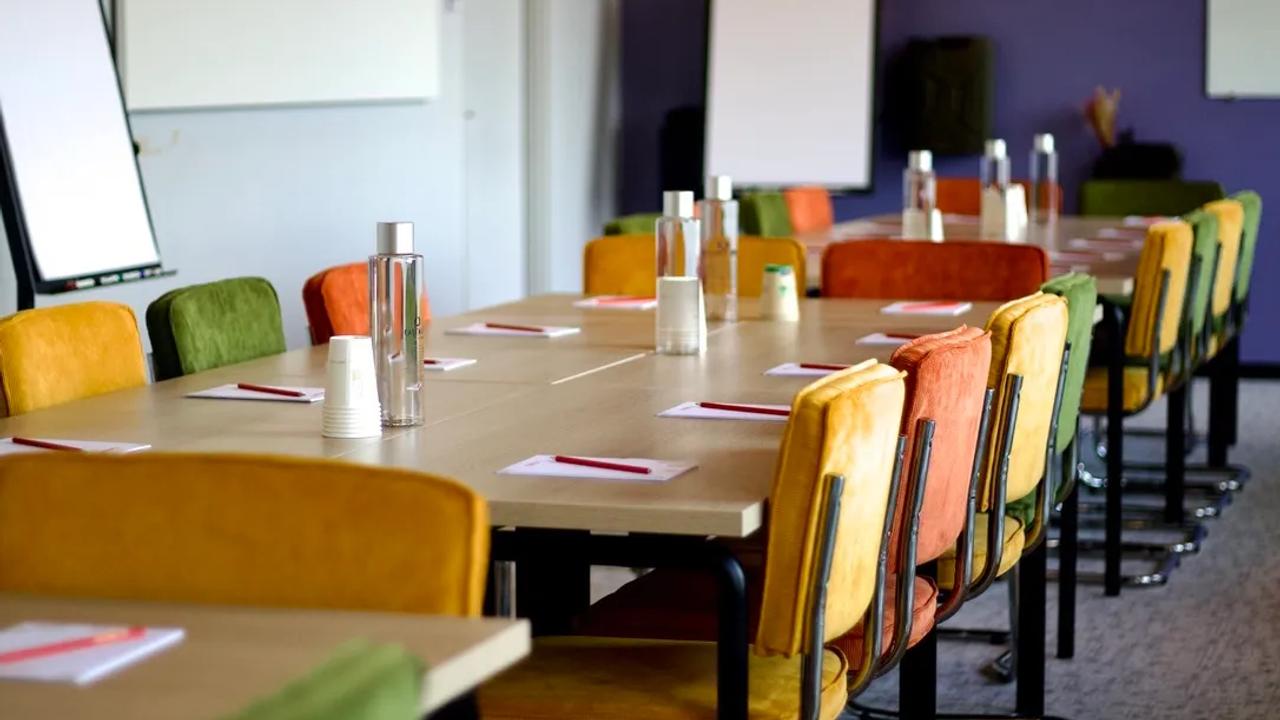
Circle, U-shape, cabaret, theater: a room's layout has a far greater impact on how a meeting unfolds than you might think. Here’s what the research reveals—and how Comet applies these principles across its spaces.
What if the real problem was never the room itself, but its layout?
You've experienced it before: a meeting that drags on, attention that starts to wane, a group that seems disengaged even though the topic is fascinating. But what if, before blaming the agenda or general fatigue, we took a look at... the chairs? A room's layout has an impact before anyone even says a word. And more often than not, it's the real culprit.
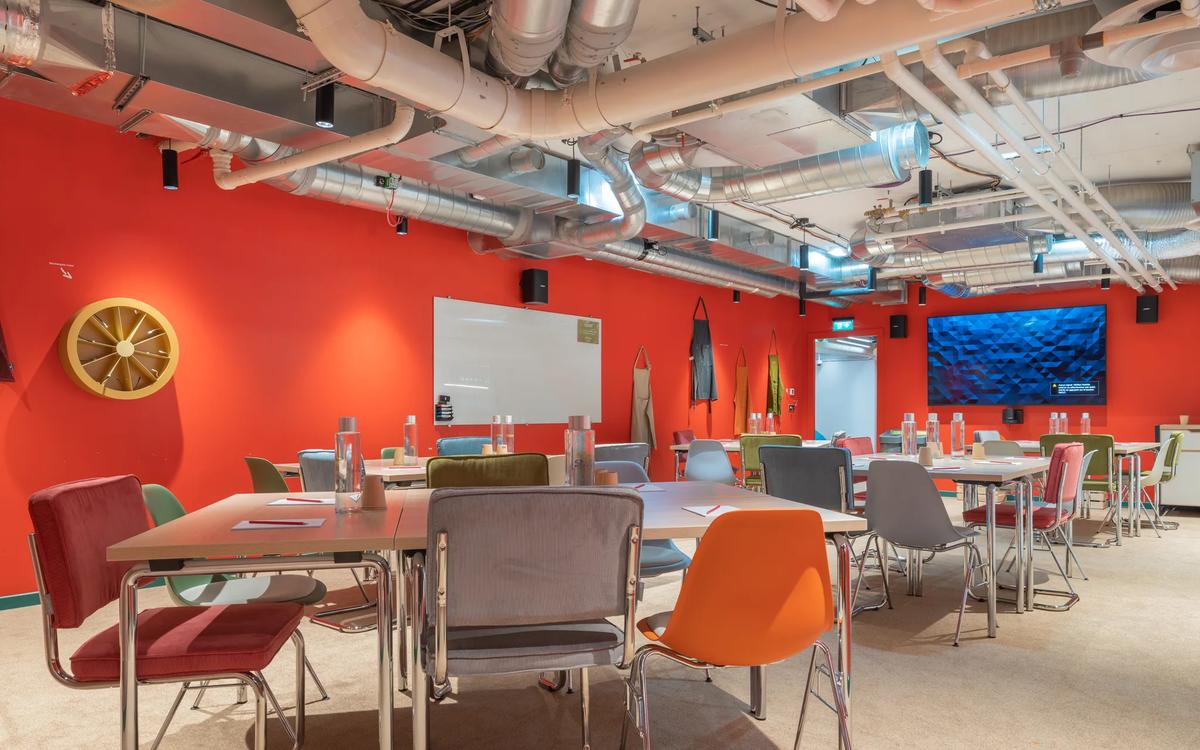
1) There is no perfect setup, only one that suits your needs
This is where it all begins, yet we constantly forget it: no room layout is inherently better than another. Theater-style seating is perfect for a plenary session but disastrous for a hands-on workshop. A circle is ideal for starting the day, but poorly suited to reaching a decision. So the real question is never “which room should we book?” but rather “what do participants need to do over the next two hours?” Listen, create, decide, debate, connect: each task calls for its own geometry.
2) The room changes the behavior of the person leading the session before it changes that of the person listening
Here is the most surprising finding of all: a room arranged in rows facing a stage turns the facilitator into a presenter, even when they had planned something entirely different. A study of two sections of the same course—with the same professor and the same content, but in two different rooms—demonstrated this conclusively: the students in the less academic-looking room finished on par with the others, despite starting at a clear disadvantage. The room was the only thing that had changed. In other words, before working on a speech or facilitation style, it is best to first consider where it will take place.
3) Cabaret, the largely forgotten option that is an excellent substitute for the U
The horseshoe layout was long the go-to choice whenever interaction was the goal. But it quickly reaches its limits: with more than 25 people, those seated along the sides fall outside the comfortable field of vision, while those at the ends become completely disengaged. Cabaret-style seating—round tables with the side facing the screen simply left empty—solves the problem in one stroke. No one has their back to the presentation, and the breakout groups are ready to get to work without a single piece of furniture having to be moved between the plenary session and the workshop. Obvious, once you think about it.
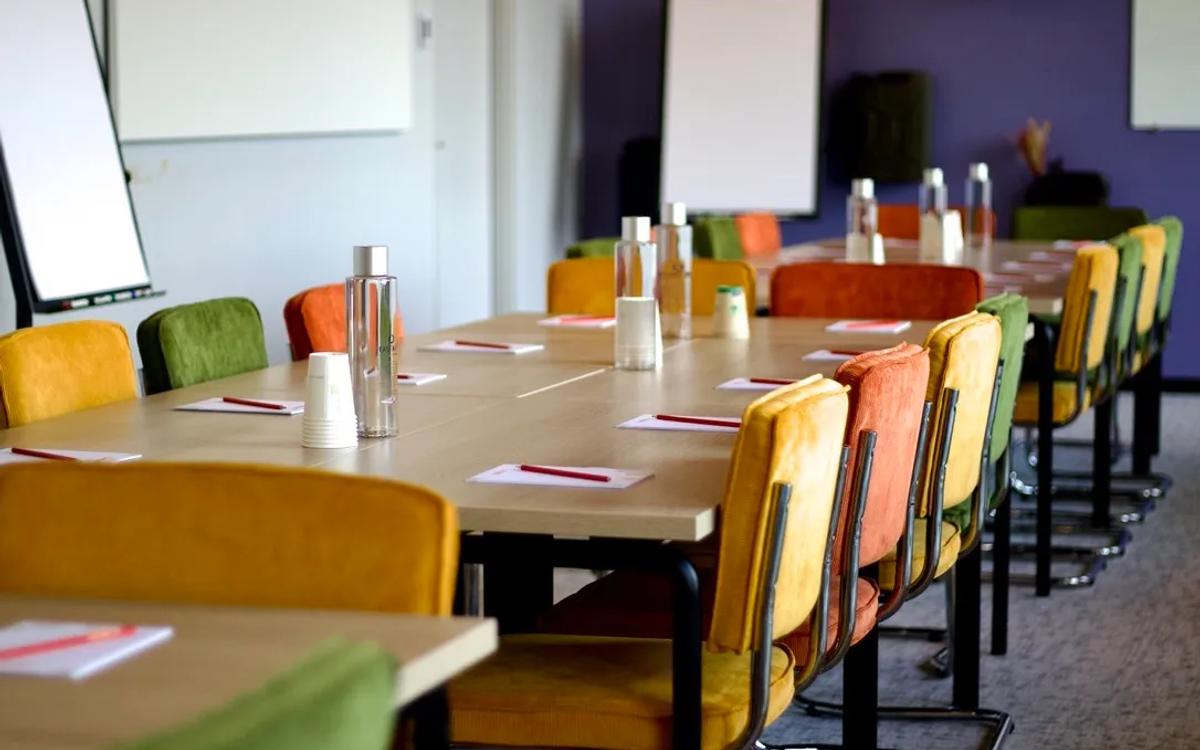
4) What really matters more than the shape of the table
You might think it all comes down to choosing between a U-shape, clusters, or theater-style seating. In reality, natural light, air quality, and the ability to move the furniture often matter more than the room layout itself. A perfectly configured room that is dark and poorly ventilated is still, ultimately, a bad room. That is why at Comet, all our rooms benefit from natural daylight: it is not merely an aesthetic detail—it is what determines the quality of a meeting even before the layout does.
5) The most powerful lever isn't the plan—it's permission
This is undoubtedly the most useful insight of all: an imperfect room that participants are explicitly allowed to rearrange works better than a perfect but fixed one. A simple sentence spoken at the start of the day—“the room is yours; rearrange it however you like”—makes more of a difference than a carefully devised layout planned in advance. The furniture matters, yes. But permission to move it matters even more.
6) Hybrid work: a matter of room layout before it is a matter of screens
Placing all remote participants on a single screen at the end of the table almost always creates a sense of exclusion, regardless of the equipment used. Distributing them along the table, each with their own visual presence, significantly narrows this participation gap. Put simply, equity between in-person and remote participants is not just about camera quality. It starts with how we think about each person’s place around the table.
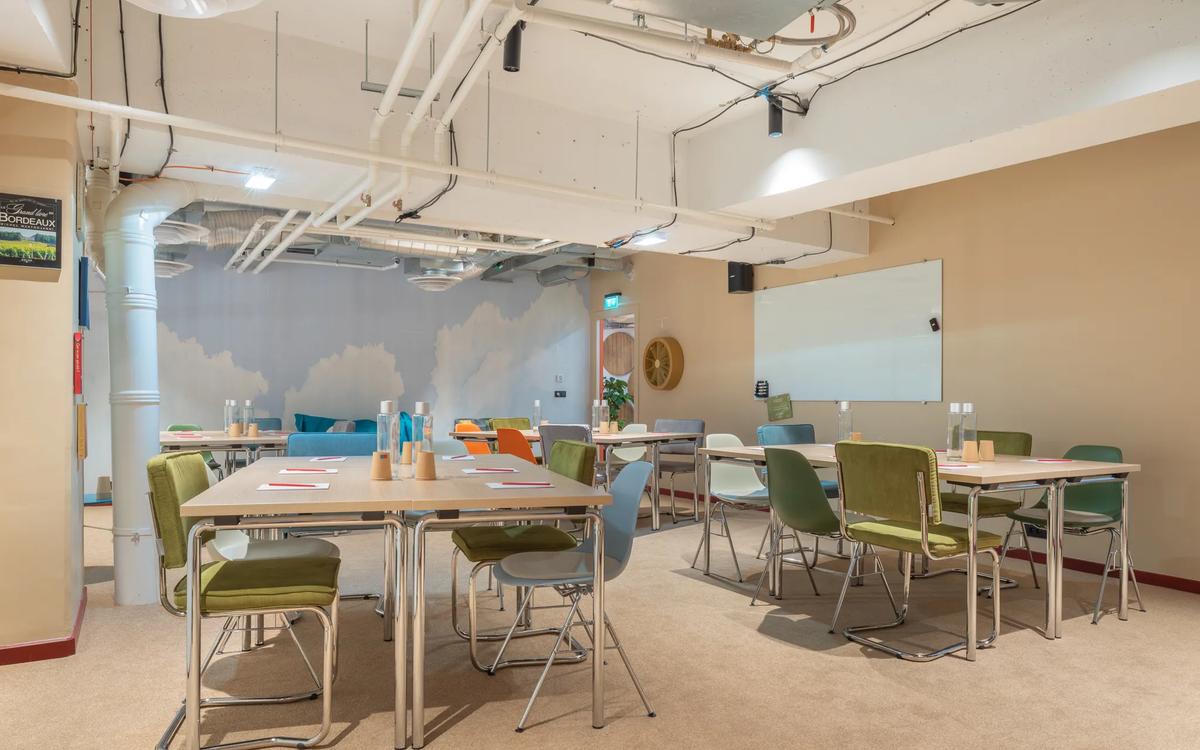
7) One Day, Multiple Configurations
No single setup is equally suited to listening, creating, and decision-making. A successful seminar therefore naturally alternates between formats: a circle to open, a cabaret-style setup for collaborative work, working walls for presentations, and a return to the circle to close. At Comet, this is exactly what our teams facilitate every day. The agenda is agreed upon in advance with the organizer, the rooms are set up before participants arrive, and any reconfigurations during the day are handled without anyone having to worry about them.
We could talk about it for ages!
drive.google.com/file/d/1PfBJ4sCxxqhSIiR--Tgi4BapNcKgLyLG/view?usp=sharing