The Comet x YouGov 2023 survey shows that working alone and remotely harms the development of nearly 50% of Spaniards and restores the value of collective time.
Working alone and remotely has a negative impact on the personal and professional development of nearly 50% of Spaniards.
Comet, the innovative concept of meeting and training spaces, has run a new survey to understand how French, Spanish and Belgian employees see professional meetings. The survey, named Comet x YouGov 2023, sheds light on the positive shift in how meetings are perceived, highlights the importance of collective moments and addresses the challenges of remote work and hybrid organisation.
According to the results, 2023 is the ideal moment to give professional meetings their value back, with a focus on the importance of social ties in meeting the needs of individuals and companies alike.
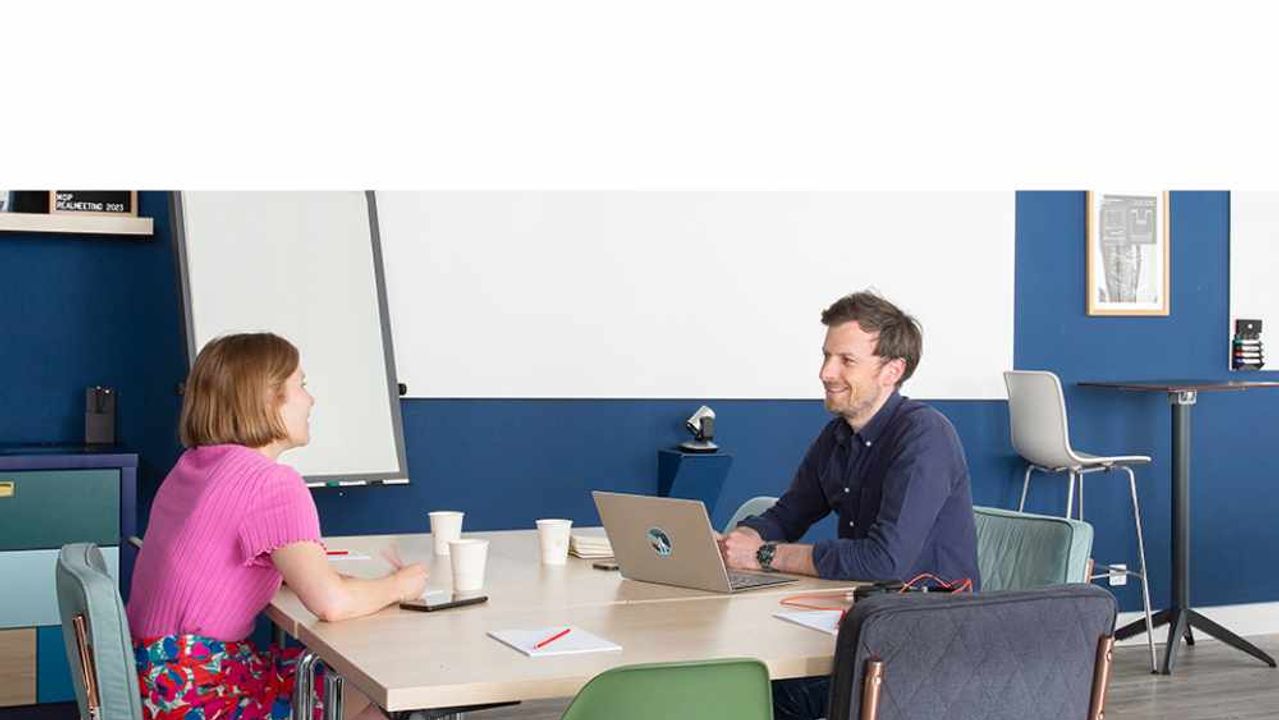
Today, the majority of French (62%), Spanish (close to 80%) and Belgian (63%) respondents find these meetings useful in a professional context. Their usefulness is therefore acknowledged, yet around 71% of respondents, across all nationalities, believe companies should work to improve the efficiency and productivity of these gatherings.
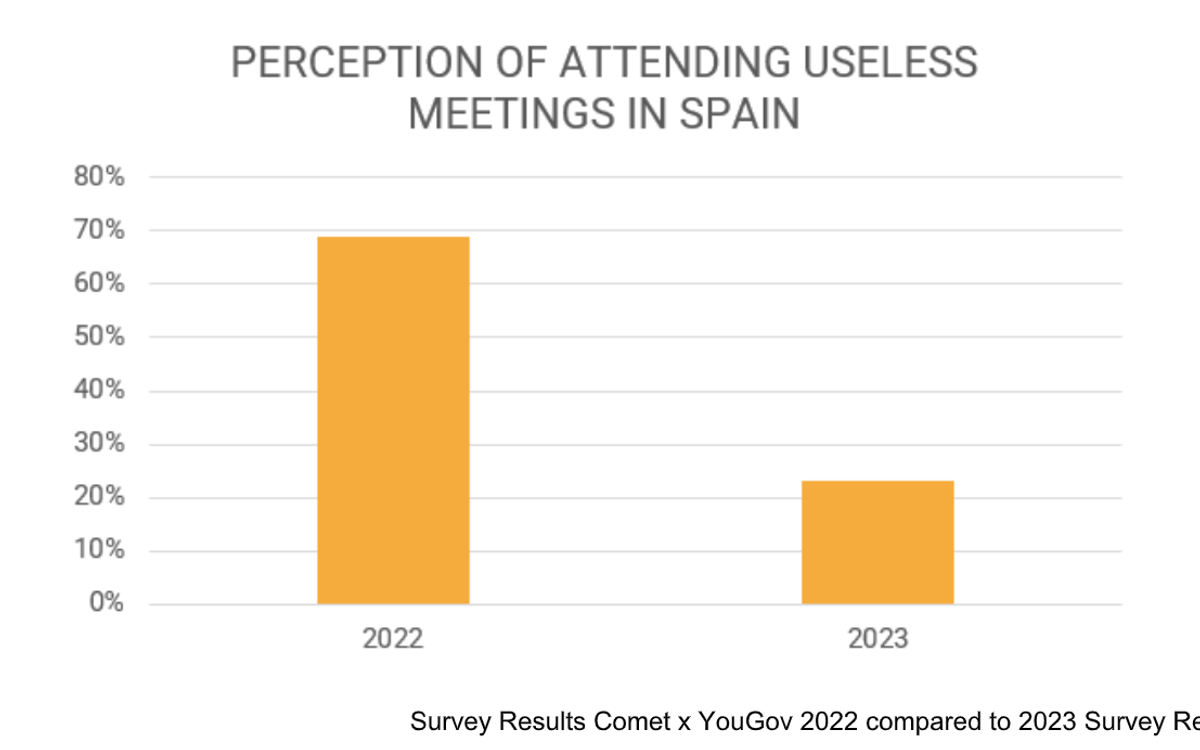
The figures from the latest wave do not correspond to NET, which means the 2022 figures may not account for certain conditions, deductions or exclusions used this year. A telling example can be seen in Spain in 2023: 20% of Spaniards face useless meetings, compared with 69% in 2022. One possible explanation lies in the post-Covid period, during which a significant number of meetings were held remotely, potentially influencing how their efficiency and usefulness were perceived.
It is also worth noting that 82% of Spaniards said they would like support in learning how to run better meetings. This growing interest reflects a sharper awareness of how important it is to improve this aspect of working life.
The importance of collective moments
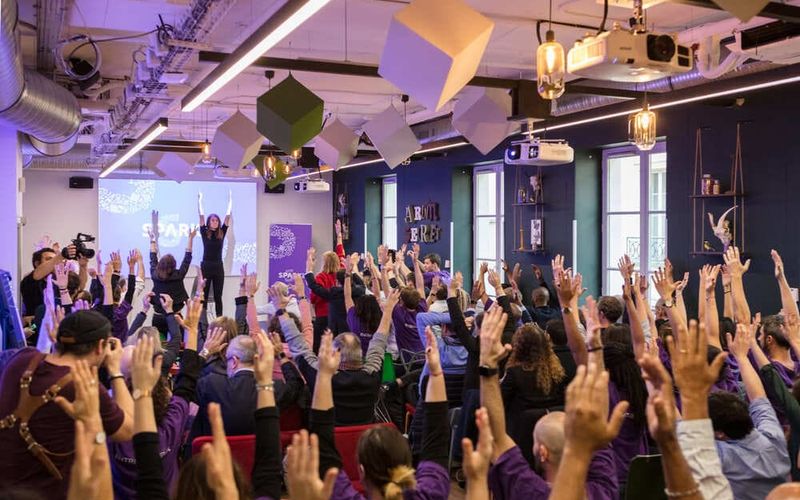
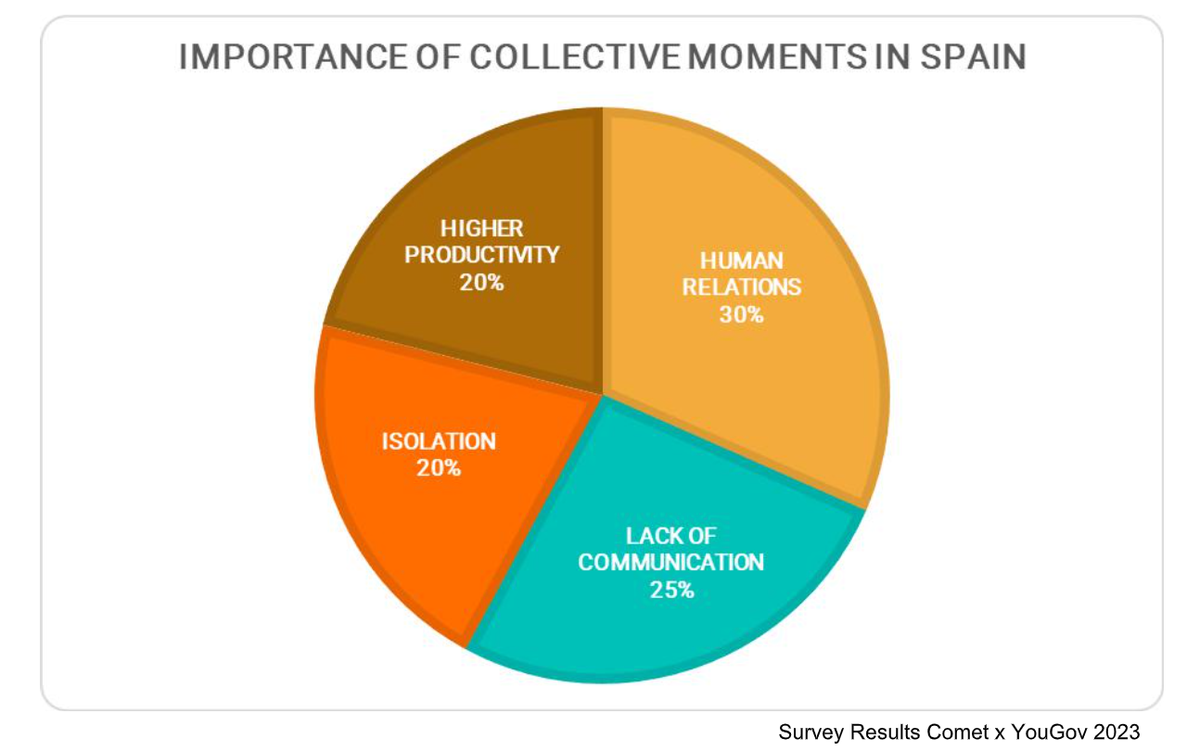
Collective moments remain valuable to professionals. The statistics show that after working alone and remotely, 30% of Spaniards felt a lack of human interaction, 25% noted a lack of information sharing between colleagues, 20% experienced a feeling of isolation and 20% believe their workload and the time spent on it increased because of working in isolation.
As companies move towards a hybrid organisation combining remote and office work, the office still plays a crucial role in building social and collaborative ties, even if people go there less often. Expectations around coming to the office reflect how much employees value those interactions: 44% expect to meet their colleagues in person to benefit from synergies and spontaneous brainstorming sessions, 28% value maintaining personal relationships and 30% want to build stronger professional ties and get more effective meeting outcomes. Finally, 39% want to work in a quiet environment, proof of how much the physical workspace matters for certain tasks and for concentration.
The challenges of remote work
On that front, remote work has not convinced everyone. Nearly 50% of Spaniards say that working alone and remotely has a negative impact on their personal and professional development. In every country surveyed (Spain, France, Belgium), the reasons given are the lack of human contact and the limited flow of information between colleagues, two aspects that are crucial for both professional and personal growth.
In that sense, a hybrid organisation combining remote and office work appears to be the most balanced answer to everyone's needs, for organisations and individuals alike. Can we then say that working in the office improves company productivity through employee interaction? According to the statistics, 34% of Spaniards prefer going to the office over working from home, and 20% of them do so because they feel more productive. The office also has a positive effect on morale: 21% of Spaniards report being in a better mood when they come in.
The survey was carried out among a representative sample of the working population (aged 18 and over) in France (n = 1,005), Spain (n = 1,020) and Belgium (n = 1,017). It was conducted online, on YouGov's proprietary panels, from 4 to 10 July 2023, using the quota method.
Comet's rebranding
This survey makes Comet's rebranding all the more relevant, as it confirms how much collective relationships matter at work. With this change, Comet seeks to promote and reflect the need for human connection and shared experiences, particularly in a remote work context.

The French company has taken a strategic turn by rounding its typography, instilling a sense of community, closeness and comfort. The choice of yellow, a symbol of sunshine and joy, radiates a dynamic and welcoming warmth: an inspiring approach that crosses borders and echoes the essence of its community.
The new brand identity was developed after seven years of growth, the opening of three markets and the successful launch of three different but complementary offers: Comet Meetings, Comet Workplaces and Comet Hospitality.
Looking back on its relatively short history, Comet realised that it also belongs to the hospitality industry, and that its business rests on service, care and experience. If clients choose Comet, it is mainly because of the team members they meet, from the sales team to the operations teams, who go to great lengths to make them feel special, energised and motivated. Comet is convinced that its role is to bring people together in a world that keeps them apart, and to put forward their true essence, a strong sense of hospitality and a clear purpose, which it seeks to convey through its new identity.
In summary
Through the Comet x YouGov 2023 survey, the company specialising in hospitality and office real estate highlighted that meetings are useful in a professional context and that working alone and remotely has a negative impact on personal and professional development. Building on those findings, it refocused its purpose with a rebranding that reflects its commitment to collaboration and to richer experiences. The new logo, combining the letters “CO” and “MET”, symbolises the value born of inspiring encounters and collaboration at work. The move from cyan to yellow expresses warmth and joy, in line with the importance of human relationships, while the soft typography suggests comfort. This rebranding goes beyond aesthetics: it aims to foster genuine encounters in light-filled spaces, in keeping with the survey results. The project, led by Seenk, highlights the involvement of all of Comet's internal teams and its attention to hospitality and to the overall experience.