
Squeezed between two workshops, wolfed down in thirty minutes, too heavy for the afternoon ahead: lunch often gets short shrift at a seminar. Yet this is where many of the conversations that matter take place.
The seminar lunch: the part we never get right

It's 12:40 p.m. The morning's proceedings are running twenty minutes late, and the solution seems obvious: cut lunch short. Thirty minutes, a lunch tray, and everyone back in the room by 1:15 p.m. On paper, the schedule is back on track. In reality, we've just sacrificed one of the most valuable parts of the day. So how can we make lunch a real highlight rather than just a buffer for when things run late?
1) If it's too short, lunch serves no purpose
Lunch at a seminar is more than just a chance to refuel. It is often the only time of day when participants can talk freely, without an agenda, with colleagues they rarely see. Ideas that emerged in the morning are explored further, disagreements soften, and new projects take shape.
For all of this to have time to happen, you need to allow at least an hour. Any less, and the meal becomes a race, while conversations remain superficial.
2) Too heavy, it leaves you sluggish all afternoon
We all know that 2 p.m. slump. It's not just about the time of day; it also has a lot to do with what we've eaten. A heavy meal with rich sauces and a big dessert makes it much harder to keep the energy up in the afternoon.
It's best to focus on balanced meals, vegetables, and sensible portions, and save the treats for the afternoon break. It's not about depriving participants; it's about pacing the day.
3) Sitting or standing—it all depends on the goal
A seated lunch encourages long, in-depth conversations, but keeps people in the same groups for an hour. A standing format, such as a buffet or a lunchtime cocktail reception, allows people to mingle more, but is less conducive to meaningful discussions.
There is no one-size-fits-all answer. If the aim of the day is to build connections between departments that don't know each other, a standing format often has the edge. If the goal is to explore a topic in greater depth, it's better to sit down.

4) Mix up the seating arrangements without making it mandatory
Left to their own devices, participants almost always sit with their usual team. A loose seating plan, or a simple instruction such as “sit with someone you don’t know,” is enough to spark connections that would not otherwise have happened.
The important thing is to keep the guidance light-touch. We're not trying to control lunch, just to give it a little nudge.
5) Plan ahead for dietary requirements
Vegetarian, gluten-free, allergies, religious dietary requirements: a successful lunch is one where no one ends up with a separate meal thrown together at the last minute. Gather this information at registration and pass it on to the venue well in advance, so everyone enjoys a meal of the same quality.
6) The right venue makes all the difference
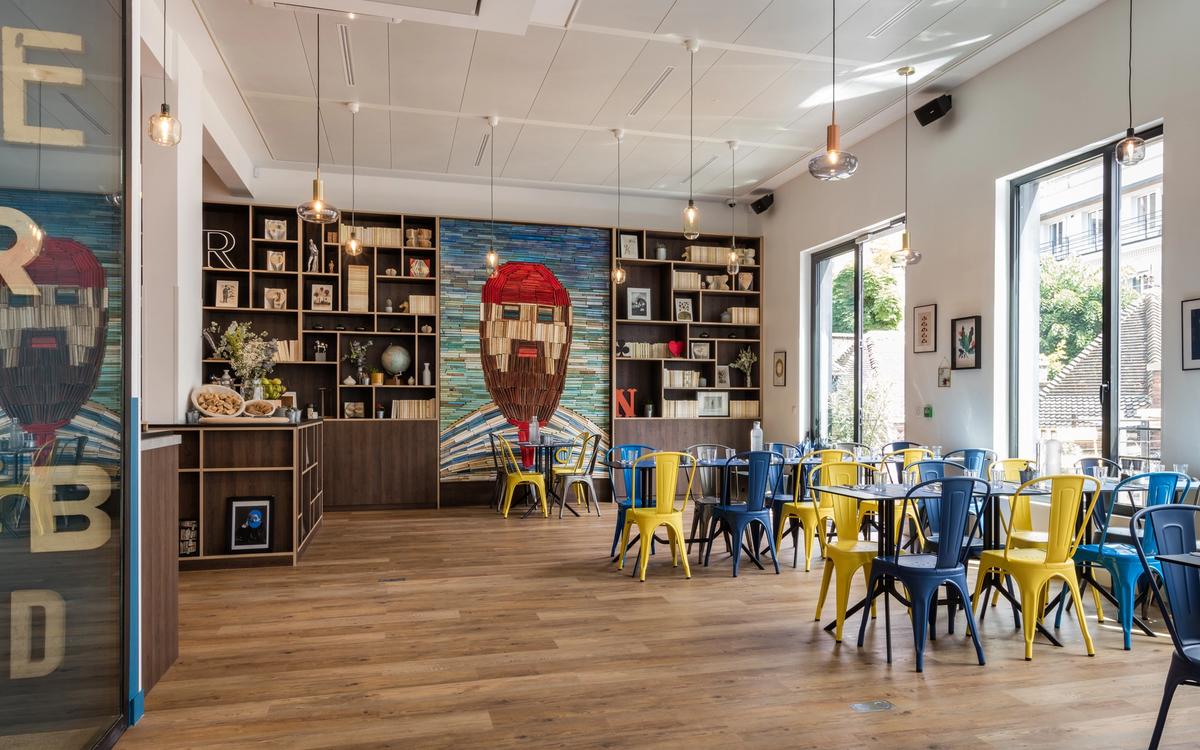
A seminar lunch is best enjoyed in a purpose-designed space, with natural light, room to move around and, ideally, access to the outdoors. At Comet, catering is provided by La Table du Chef Meliava, with food tailored to the working day: generous without being heavy, and mindful of everyone's dietary needs.
At Comet, we’ve also noticed that lunch comes up very often in participant feedback, sometimes even more than the morning workshops.
So, how long do we have for lunch?
At least an hour, a meal that won't leave everyone sluggish all afternoon, a format tailored to the day's goals, and a little nudge to get people mingling across tables: it doesn't take much, yet these are often the things that make the difference between an effective seminar and a memorable one.
A good seminar is also judged by what's on the plate.
comet-meetings.com/seminaire-entreprise-paris