What are the meeting habits of employees in France, Belgium and Spain? A study carried out by Comet and YouGov!
STUDY : 86% OF FRENCH EMPLOYEES ARE STILL FACED WITH POINTLESS MEETINGS
Behind this figure, strong expectations from employees, but ones that go unmet.
In an unprecedented study, the Yougov institute surveyed 3000 European employees on behalf of Comet Meetings in the 3 countries where it operates: France, Belgium and Spain, about meeting practices. It is the first post-pandemic study to look into the subject, including both in-person and remote formats. It gives an overview of the practices in force in these 3 countries. While some traits are common to the 3 managerial cultures studied, others show very different trends from one country to another. In France, it is the question of the usefulness of meetings that arises, while a large majority of employees are asking to improve the way these meetings are run. Comet Meetings has become the expert in corporate meetings, turning them into moments that bring meaning, creativity and performance all at once. In the light of this study, Comet notes that while the intention to bring teams together is very much there, work on management and on meeting training is needed, particularly in France.
The key figures of the study for France :
- 73% of the people surveyed would like their meetings to be better organised
- 51% of employees sometimes attend meetings without knowing exactly why they are there
- 68% of teams in France have never been trained to run meetings
- 45% of the French working people surveyed never hold one-to-one meetings
- 40% of respondents do not hold meetings with more than two people
“The meeting is a major moment in the company. This study shows that it has not yet found its full potential, comments Victor Carreau, CEO of Comet Meetings. We are ready to launch the revolution of the future of work that employees are waiting for, as they are calling for changes in the usefulness and the frequency of team moments. Our mission is also to make employers aware of this situation” he concludes.
The usefulness of the meeting: a persistent symptom of French-style meetingitis
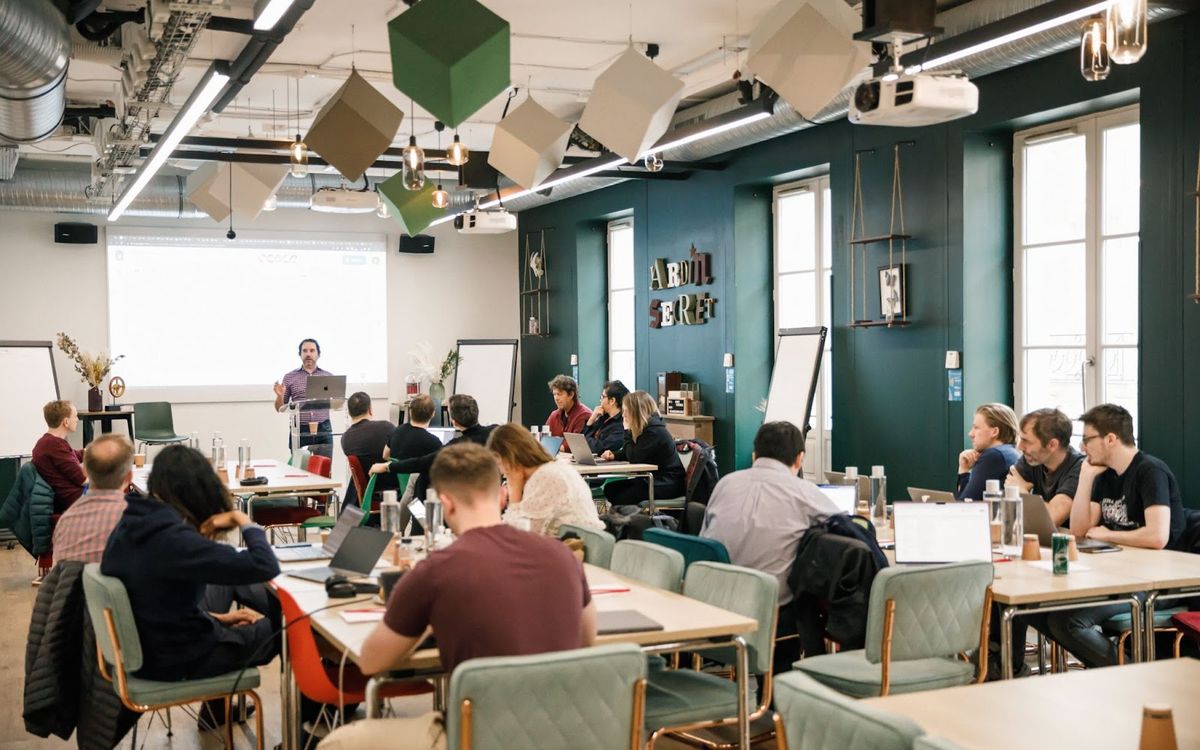
The surprise of this study: the time spent in meetings is not the sign of the famous meetingitis, but it is rather the perceived usefulness of that time within the company that raises questions. Only 11% of the people surveyed find that all their meetings are very useful, with no distinction between managers and managed employees. 49% of the people surveyed in France spend less than 6h in meetings each week, and 40% state that they “never attend meetings with more than two people, which rules out the time factor. In France, then, people would not meet too often, but they would meet badly, without giving that time its full function... Finding the place of the meeting and its raison d’être in employees’ daily lives, whether or not they hold a managerial position, is a real expectation: for France, nearly 73% of the 1003 people surveyed would like meetings to be better run in their company. An expectation to which Comet Meetings has made a speciality of bringing an answer, by offering a turnkey solution that combines exceptional venues designed to foster the success of meetings and seminars, as well as a range of services to prepare and run them well.
The meaning of the meeting: mixed results, especially among young people
Going to a meeting knowing the reasons why you have been invited seems obvious. Yet the study reveals that in France, while the majority of employees know most of the time why they are invited, Juniors and Seniors are not on an equal footing. 82% of 18-24 year-olds systematically know why they are invited, compared with 99% of those over 55. In Spain and Belgium, this difference is absent.
The question of meaning also arises in terms of managerial follow-up: while the meeting is thought of as the main time for sharing and exchanging information between employees, 17% of managers state that they do not hold meetings with more than 2 people, and 19%, largely from the same profile, state that they never hold one-to-one meetings... This trend is specific to France, and shows that there is still some way to go to build and strengthen a genuine collective dynamic within companies.
Training to run a meeting: a solution and an expectation, but unmet ones
While the time spent in meetings remains relatively significant, that time is not yet used to gain in team cohesion, in positive managerial impact and in overall performance. Yet expectations are high: to the question “would you like your company to improve the way it runs meetings” a majority of the people surveyed answer yes in the 3 countries, particularly in Spain (84%). In France, 73% would like it, whether they are managers or non-managers. As for training in running meetings, the figures make the observation heavier still: 68% of employees in France have never been trained in meetings. Only 50% of managers have been trained at least once in their career. The situation is identical among our Belgian neighbours, whereas on this training side almost half of the Spanish respondents (45%) have been trained in it. Notably, when you are a woman in France, you are half as likely to be trained in meetings. (23% of women compared with 40% of men are).
For Victor Carreau, CEO of Comet Meetings “ If we look closely at the figures of this study, we see that 86% of the people surveyed are still faced with pointless meetings. This figure is significant but it reflects a necessity: companies must turn the meeting into a collective moment that allows people both to socialise and to rally around the objectives to be reached. But to get there, method and training are necessary for employees. It is the very purpose of Comet Meetings to set its clients on the path of tomorrow’s meeting, and our venues as well as the services we offer there are geared towards that goal. Our teams work on this challenge every day, which is moreover the reason why we recently brought in Florian Guillot as “Meeting Evangelist” in order to push our expertise on the subject even further.”