From a factory that once employed up to 1,500 workers to Europe's largest timber office campus, the Papeteries de la Seine site has never stopped reinventing itself. A portrait of a place where industrial history and nature exist in harmony.
Comet Arboretum: Why a Former Paper Mill Became Our Greenest Venue

More than 120 years ago, this plot of land on the banks of the Seine in Nanterre echoed with the sound of paper-making machinery, not the rustling of leaves. Today, the exact opposite is true: Comet Arboretum lies at the heart of Europe's largest timber office campus, planted with more than a thousand trees, on the site where a factory long supported an entire neighborhood. So how did paper give way to trees?
1) A place designed to let you breathe, literally
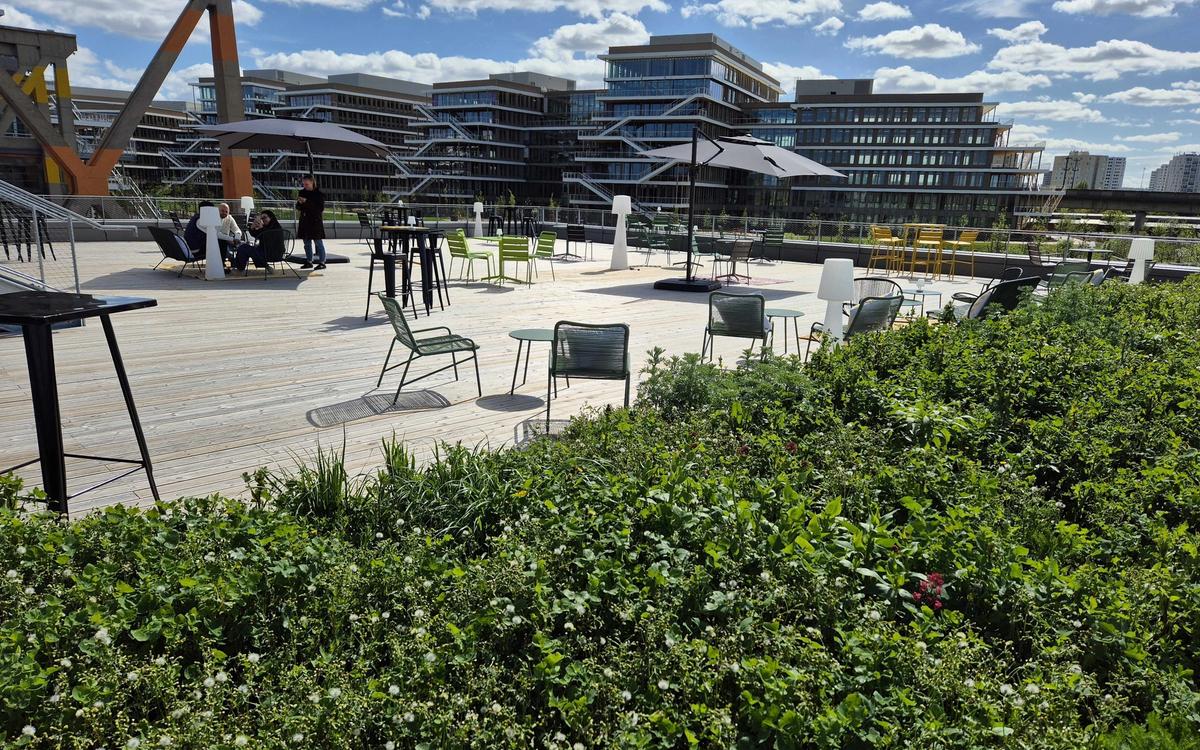
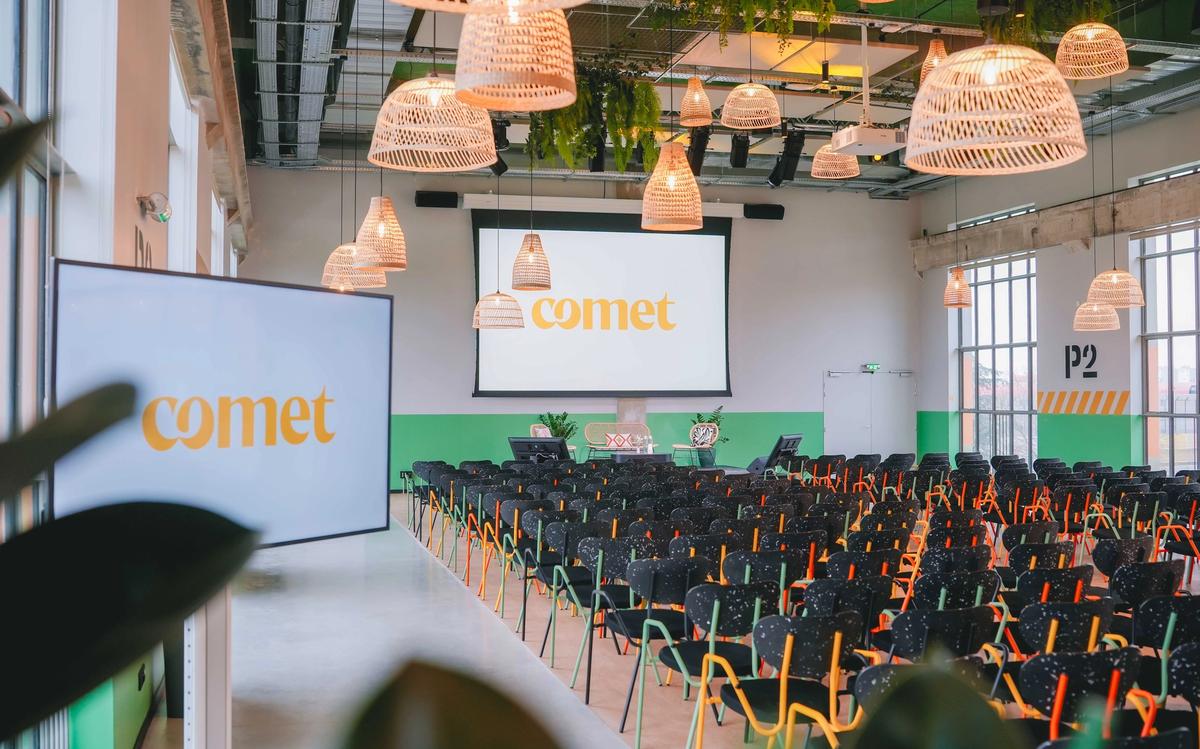
Comet Arboretum now offers 2,400 m² spread across several floors, twelve flexible meeting rooms, a large 416 m² plenary hall, and three terraces, accommodating groups of 2 to 400 people. But the first thing that strikes you when you arrive is the setting: a campus nestled in the heart of a park with more than a thousand trees, right on the banks of the Seine.
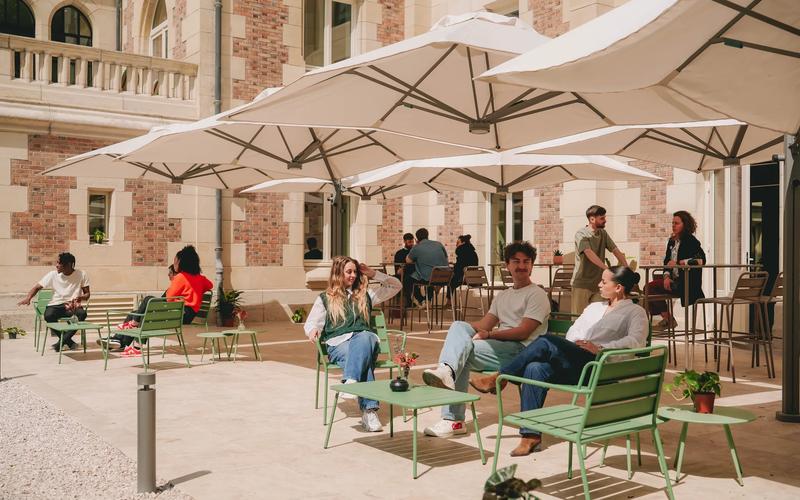
Meetings, seminars and corporate events are held there overlooking the greenery; lunch is served on the terrace, where birdsong is more noticeable than traffic noise, and it is easy to forget that La Défense business district is just a few minutes away.
2) A newspaper, a need for paper, and a factory that takes root
The story begins in 1904, when Jean Dupuy, a politician and powerful newspaper proprietor, decided to establish a mill in Nanterre capable of supplying the paper needed for his newspapers. The idea was almost strategic: to control the entire production chain, from timber to printed pages, without relying on outside suppliers. The prefectural order authorizing construction was issued in 1905, and the Papeteries de la Seine paper mill was established on a site of more than 17 hectares along the river.
The choice of location was no coincidence: its proximity to Paris and direct access to the Seine, convenient for both water supply and transportation, made it an ideal industrial site for the time.
3) Up to 1,500 workers, and an entire neighborhood living to its rhythm
For decades, the factory grew and became one of the mainstays of Nanterre's economy. In the 1950s, it employed as many as 1,500 people, a figure that reflects its importance in local life. An entire neighborhood took shape around the paper mills, with its own rhythm, customs, and working-class heritage passed down from generation to generation.
The site remained in operation into the 21st century, recycling nearly 190,000 tonnes of waste paper annually toward the end of its existence under the banner of the Irish group Smurfit Kappa. In March 2011, management announced the permanent closure of the plant, bringing more than a century of industrial activity on the site to an end.
4) From an industrial site to Europe's largest timber office campus
The closure of the paper mills could have consigned this plot on the banks of the Seine to any standard real estate development. Instead, the exact opposite happened. Today, the site has become Arboretum, Europe’s largest office campus built from solid timber, conceived not simply as a collection of buildings, but as a new way of thinking about everyday working life.
The symbolism is powerful: where machines once turned trees into paper, entire timber buildings now house the teams. In a way, the circle has come full circle.
5) What remains, and what has changed
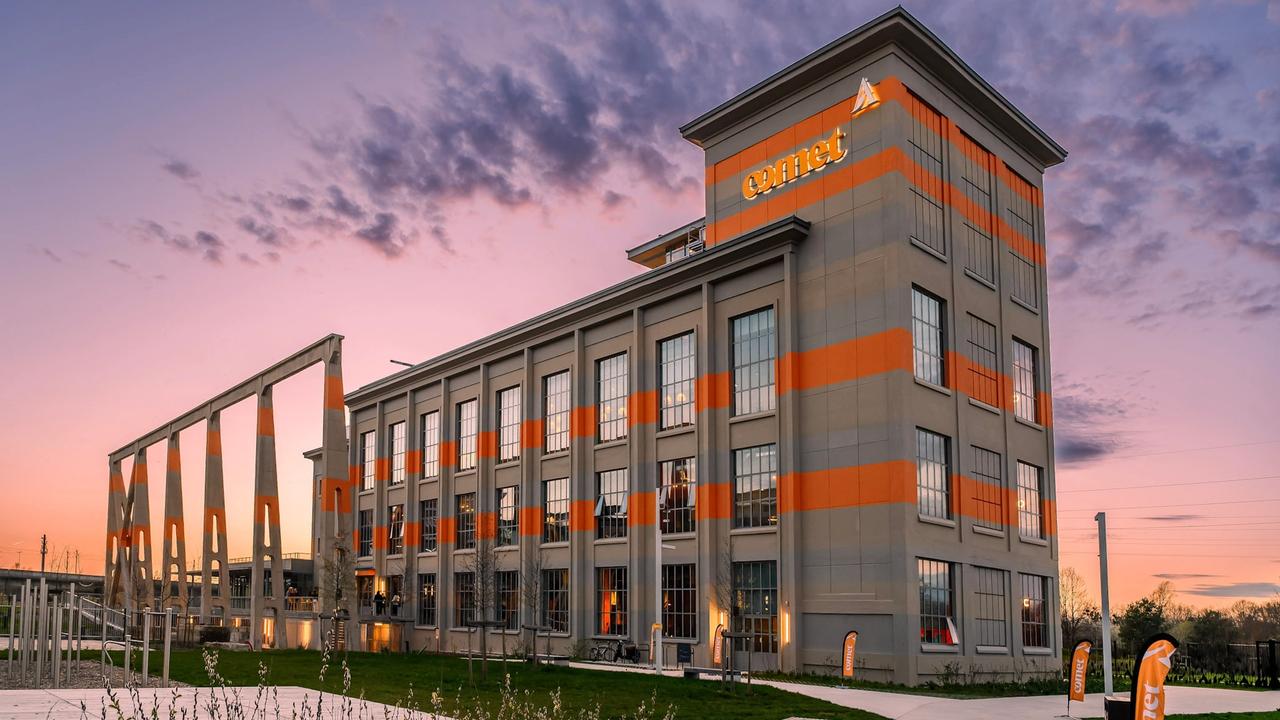
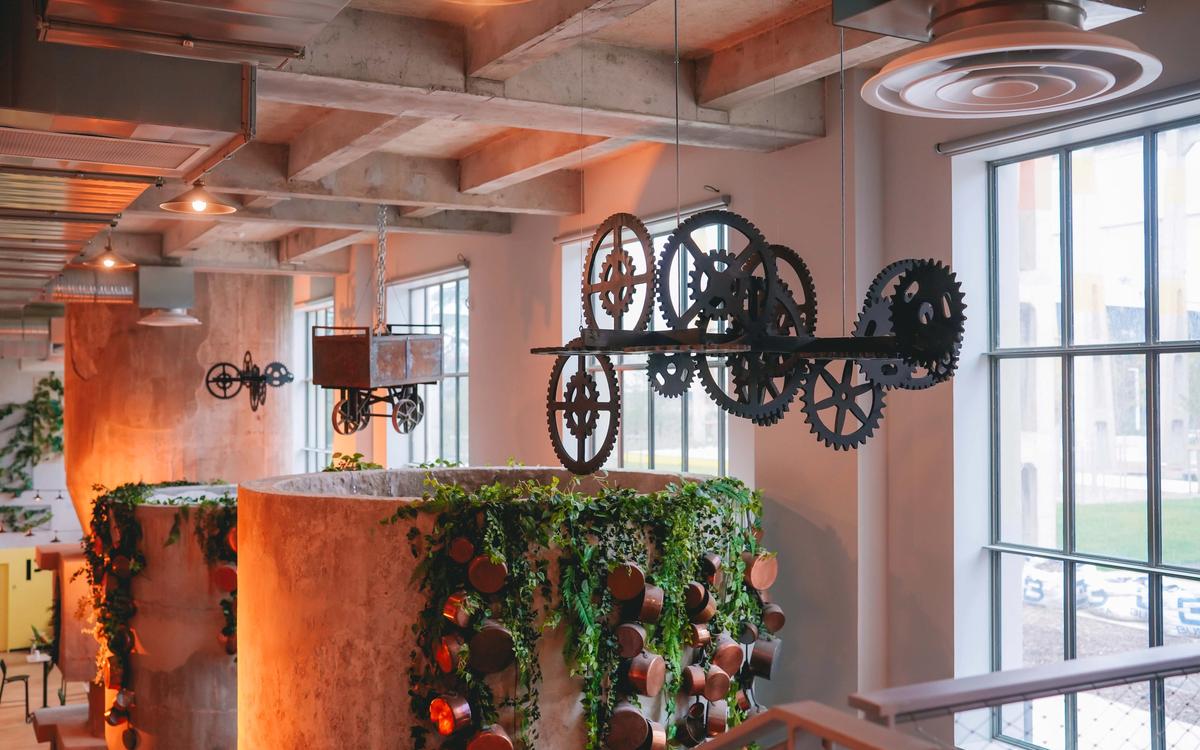
The neighborhood has not completely erased its industrial past. The pump house, once used to draw water from the Seine to supply the factory, is still visible along the towpath, as are some of the lanterns from the site's former entrance gate. Right next to the campus, the Jardin des Papeteries, a 2.2-hectare green space, was deliberately designed to incorporate this industrial history rather than erase it.
It is against this backdrop, halfway between industrial heritage and environmental ambition, that Comet Arboretum has taken root.
6) What this story is really about
There is something quite fitting about a place that once turned wood into paper now welcoming teams who come to think, create, and make decisions, surrounded by real trees rather than reams of paper. The site's industrial history has not disappeared; it has evolved. At Comet, that is exactly what we aim to do with each of our venues: breathe new life into buildings that already have a story to tell.
So, ready to take a deep breath?
From paper machines and solid wood desks to 1,500 workers and more than a century of industrial activity, the Papeteries de la Seine site has never stopped reinventing itself. Today, Comet Arboretum is carrying this story forward, offering the teams who gather there a breath of fresh air that few venues in the Paris region can match.
A corporate retreat in the countryside, just minutes from La Défense.
comet-meetings.com/lieux/comet-arboretum